
The question comes up constantly in our conversations with developers and estate agents: should we commission photography or go with CGI? It sounds like a simple choice, but the answer genuinely depends on where your project is in its lifecycle, what you’re trying to communicate, and who you’re trying to convince. Understanding the real distinction between CGI vs Traditional Architectural Photography for Real Estate Marketing: When Each One Actually Makes Sense isn’t about which tool is better — it’s about which tool is right for your specific situation. Both have real strengths. Both can be misapplied. And using the wrong one at the wrong time can cost you money, delay your marketing timeline, or simply fail to land with your audience.
I’ve worked on projects where a developer insisted on waiting for the building to complete before doing any marketing photography — only to then struggle to pre-sell units while construction dragged on. I’ve also seen CGI used on a finished property where the building was perfectly photogenic and already occupied, which made no practical sense. The mistakes usually come from habit rather than strategy. So let me break this down properly.
What Traditional Architectural Photography Actually Offers
Traditional architectural photography, when done well, is genuinely compelling. A skilled architectural photographer captures real light, real texture, real atmosphere. The shadows falling across a concrete wall, the way morning sun hits a glazed facade, the lived-in feeling of a well-designed interior — none of that is fabricated. That authenticity is the entire point, and it resonates with buyers and tenants who are cautious about being misled.
Photography works best when the asset is complete, well-presented, and visually strong in real life. Luxury homes, high-spec commercial interiors, hospitality fit-outs — these are all situations where the physical reality is worth capturing. A boutique hotel that’s been beautifully designed and fitted out? Get a photographer in there. A completed penthouse with panoramic views? Same answer. The building is doing the work; your job is to document it faithfully and with skill.
The limitations, though, are significant. Photography is entirely dependent on what exists. If the landscaping isn’t done, if the furniture hasn’t been staged, if the weather is grey, if the neighbouring building site is an eyesore — you’re stuck. You can do a great deal in post-production, but you can’t photograph something that isn’t there. You also can’t iterate. If a client wants to see the same living room with different flooring or a different colour palette, you’re booking another shoot, not just adjusting a file.
CGI vs Traditional Architectural Photography for Real Estate Marketing: When Each One Actually Makes Sense
Let me be direct: CGI exists specifically to solve the problems that photography cannot. The most obvious use case is off-plan property — selling or marketing a development before it’s built. This is where how residential developers use interior renderings to sell off-plan properties before construction starts becomes directly relevant. Without CGI, you have no visual marketing material until the building is complete. That can be a serious commercial disadvantage when you’re trying to pre-sell units, attract investors, or launch a campaign 12 to 18 months before handover.
CGI is also the right answer when you need to show multiple design options. Developers offering buyers a choice of kitchen finishes, flooring, or bathroom tiles need visuals for each variant. Photography can’t deliver that efficiently or affordably. A well-built 3D model, on the other hand, can be re-lit, re-textured, and re-rendered to show every configuration without reshooting anything.
There’s also the consistency argument. Photography varies — different weather, different times of day, different photographers. CGI from a single studio on a single project maintains visual consistency across every image, which matters enormously for brochures, websites, and marketing suites where visual coherence builds brand trust.
The Off-Plan Development Case: CGI Wins Every Time
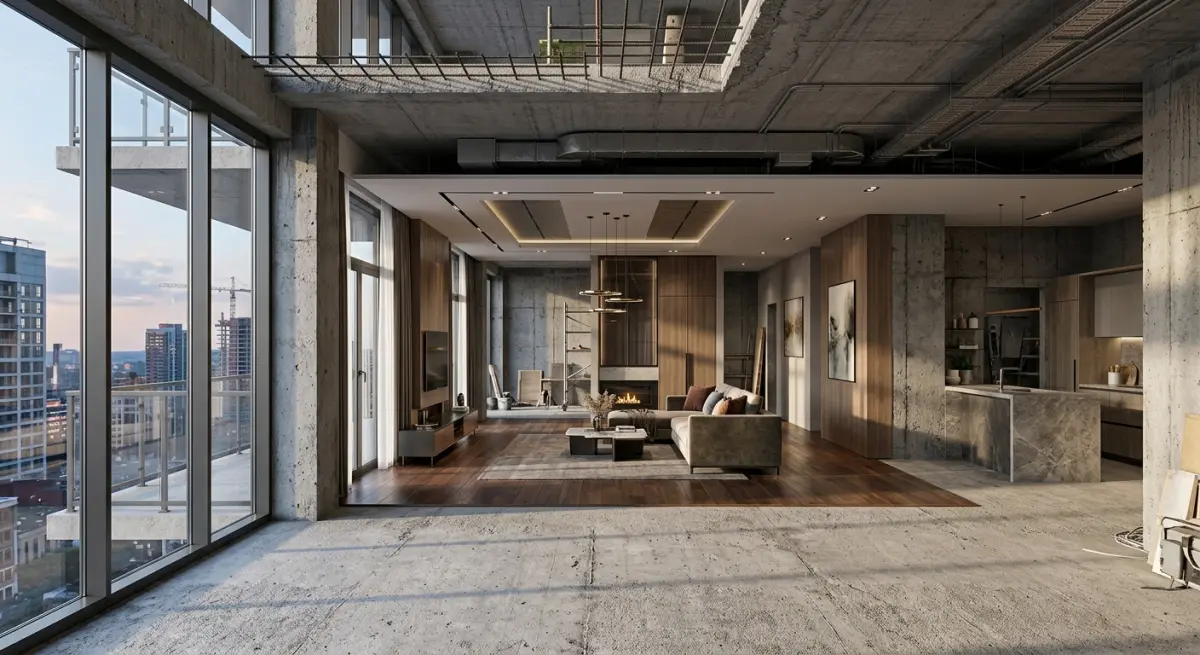
If your building doesn’t exist yet, the decision is made for you. CGI is your only option for photorealistic visual marketing. But within that, there’s still a meaningful conversation about what type of CGI is most effective. A static exterior render tells a different story to a 3D 360 virtual tour rendering, and both of those serve different purposes to a walkthrough animation or a set of detailed floor plan renders.
For a residential development, you’d typically want hero exterior shots, key interior typologies (living space, master bedroom, kitchen), and a floor plan that helps buyers understand spatial relationships. For a larger mixed-use scheme, you might layer in aerial perspective work — and if you want to understand the strategic choices there, the conversation around aerial rendering vs site plan drawings what mixed-use developers are using to get schemes approved faster is directly relevant to your planning and marketing workflow.
The key point is this: CGI on an off-plan project isn’t a compromise. Done well, it’s more controlled and more persuasive than photography, because every element — lighting, furniture, greenery, sky, even the people walking past — is intentional. Nothing is left to chance.
When Photography Makes More Sense Than CGI
There are clear scenarios where traditional photography is the better call:
- The building is complete and looks genuinely impressive. If the architecture, interiors, and context are strong in real life, photography captures authenticity that CGI can’t replicate convincingly without serious investment.
- You’re marketing to an audience that values ‘real’. Some buyers — particularly at the ultra-prime end of the residential market — are attuned to CGI aesthetics and respond better to photography. They want evidence, not vision.
- Turnaround time is critical and the building is ready. A good architectural photographer can deliver edited images within days. CGI from a brief to delivery typically runs longer depending on complexity — if you want a realistic expectation, it’s worth reading about how long does architectural 3d rendering actually take a project by project turnaround guide.
- Heritage or character properties. A Victorian terrace, a period conversion, a barn — these have qualities that CGI struggles to convey. Real texture, patina, and imperfection are what make these properties desirable, and photography captures that far better.
Hybrid Approaches: Where CGI and Photography Work Together
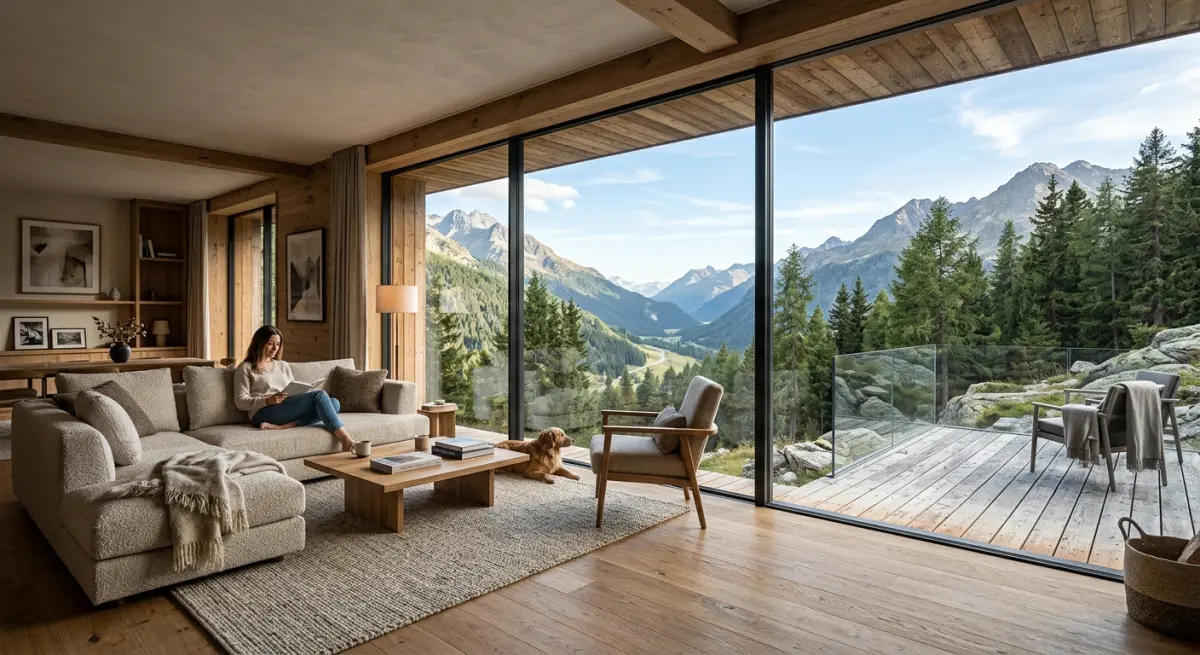
The smartest developers don’t treat this as a binary choice. They use CGI in the pre-construction phase to drive pre-sales and investment, and then commission photography once the building is complete — using the photography to update their marketing materials and support ongoing lettings or resales.
There are also hybrid rendering techniques worth knowing about. CGI can be composited onto real photography, particularly for exterior renders where you want the building shown within its actual streetscape or landscape context. You photograph the site, then render the building into the image. This is a common approach for planning applications and for marketing materials where contextual accuracy matters.
Interior designers and architects working on live projects often use CGI in the design stage to align client expectations before any physical work begins. If you’re curious about how that workflow operates in practice, the detail in how architects use 3d interior renderings to reduce client change requests during the design stage is directly applicable. The CGI does its job during design; photography does its job at completion. Neither replaces the other.
What Clients Get Wrong — And How to Avoid It
The most common mistake is timing CGI too late. We regularly speak to developers who only think about visualisations once construction is weeks away from completion — by which point they’ve lost months of potential pre-sales marketing. CGI should be briefed as soon as architectural drawings are sufficiently developed, which in most residential projects is well before groundworks are finished.
The second mistake is treating CGI as a budget line to cut. Poorly produced CGI — flat lighting, generic furniture, unconvincing materials — does real damage to how a project is perceived. Buyers read image quality as a signal about build quality. It’s a blunt but accurate instinct on their part. If your CGI looks cheap, so does your project. The same logic applies to photography, incidentally — hiring a poor photographer for a premium property is equally counterproductive.
The third mistake is expecting photography to do what CGI should have done. Photographing a construction site, a shell-and-core floor, or a partly furnished show home rarely produces marketing-grade images. CGI can show the finished vision with complete control. Photography should document reality when reality is ready.
Finally, don’t underestimate the power of supporting formats. Static images — whether CGI or photography — tell part of the story. But floor plans, virtual tours, and walkthroughs close different gaps in a buyer’s understanding. 3d floor plan rendering for estate agents how property listings with visual floor plans convert faster is a good example of how ancillary formats often outperform hero imagery in terms of practical buyer engagement.
Making the Decision for Your Project
To summarise the framework cleanly:
| Scenario | Recommended Approach |
|---|---|
| Building not yet built (off-plan) | CGI — always |
| Building complete, strong visual quality | Photography — with possible CGI supplements |
| Need multiple design variants shown | CGI |
| Heritage or character property | Photography |
| Planning application visuals | CGI (often with contextual photography composite) |
| Investment deck or pre-launch campaign | CGI |
| Completed project for resale or ongoing lettings | Photography, updated CGI if refurbished |
| Show home or model unit presentation | CGI during design, photography at physical completion |
CGI vs Traditional Architectural Photography for Real Estate Marketing ultimately comes down to one question: are you communicating a future vision or documenting a present reality? Answer that honestly for each project and the right tool becomes obvious. Use both intelligently, not habitually.
If you’re working on a development and want to understand which visualisation approach fits your timeline, budget, and marketing goals, we’re happy to talk it through. Contact us at 360archviz.com and we’ll give you a straight answer based on your actual brief.
Frequently Asked Questions
Is CGI photography cheaper than hiring a professional architectural photographer for real estate listings?
CGI is typically more cost-effective for properties that are still under construction or require multiple design variations, since reshooting a physical property every time a detail changes can be expensive. However, for completed properties, traditional photography often has a lower upfront cost and faster turnaround, making it the budget-friendly choice for standard listings. The real savings with CGI come at scale, such as when developers need to market an entire building portfolio before a single unit is built.
Can CGI architectural images actually replace traditional photography for luxury real estate marketing?
CGI can produce stunningly photorealistic images that rival traditional photography, but luxury buyers increasingly expect a mix of both to validate authenticity and build trust. High-end clients often want to see real photographs alongside CGI renders to confirm the quality of finishes, natural lighting, and spatial feel. Using both together tends to be the most effective strategy for luxury real estate, with CGI showcasing potential and traditional photography confirming reality.
When should a real estate developer choose CGI over traditional photography for a new construction project?
CGI is the clear choice when a project is still in the design or construction phase and there is no physical space to photograph yet, allowing marketing and presales to begin months or even years earlier. It also makes sense when developers need to showcase multiple unit configurations, interior finishes, or seasonal lighting conditions that would be impossible or prohibitively expensive to capture with a camera. Traditional photography becomes relevant once construction is complete and the goal shifts to showcasing the real, finished product.
How do buyers and renters actually respond to CGI images versus real photos in real estate listings?
Research and industry experience show that buyers respond positively to CGI when it is clearly labeled as a render, but distrust can arise if CGI is mistaken for real photography and the finished property looks different. Traditional photographs tend to generate stronger emotional connection because they confirm what a buyer will actually experience when they walk through the door. The most effective listings use CGI to create aspiration and anticipation while using real photography to close the emotional sale once the property is ready.
What are the biggest limitations of CGI compared to traditional architectural photography in real estate marketing?
The most significant limitation of CGI is that it requires substantial upfront time and skill to produce accurately, and errors in scale, material texture, or lighting can make spaces look artificial or misleading to potential buyers. Traditional photography captures real-world imperfections, natural light behavior, and spatial depth in ways that even the best CGI can struggle to fully replicate. Additionally, CGI cannot authentically convey neighborhood context, surrounding views, or the lived-in character of a property that genuine photography communicates instantly.