Purpose-built student accommodation — PBSA in short — sits in a unique corner of the property development world. It’s not quite residential, not quite hospitality, and the people who need to sign off on it before a single brick is laid come from very different professional backgrounds. You’re dealing with institutional investors who think in yield, university accommodation managers who think in welfare and brand, and planning committees who think in context and community impact. Getting 3D Rendering for Student Accommodation Developments: What PBSA Investors and University Partners Need to See at Pre-Approval Stage right isn’t just about making pretty pictures. It’s about producing the right visual evidence for each audience — at the right moment in the approvals process. In our studio, we’ve worked across enough institutional residential and mixed-use schemes to know that the biggest mistakes happen when developers treat all stakeholders as one audience and produce generic visuals that satisfy no one completely.
The pre-approval stage for PBSA schemes is genuinely high-stakes. University partners need to be convinced that the development reflects their campus identity and meets the pastoral expectations of their students. Investors need to see that the scheme stacks up operationally — that the communal areas are genuinely usable, that the bedrooms aren’t just boxes with a bed, and that the density feels justified rather than crammed. Planning authorities need confidence about how the building sits in its surroundings. Each of these requires a different emphasis in the visualisation package. A single hero exterior shot won’t cut it.
This is also a sector where off-plan commitment matters enormously. Nomination agreements with universities are often negotiated before construction. Institutional funding rounds close before the development is built. So the renders you produce are effectively the product. They carry a heavy load.
What PBSA Investors Actually Need to See in a Pre-Approval Render Pack
Institutional investors in student accommodation are a specific type of audience. They’re not buying a lifestyle — they’re underwriting an operational asset. What they need from a visualisation package is evidence of viability, not just aesthetics. That means the renders need to do more than look good. They need to communicate space efficiency, operational logic, and the kind of social environment that drives occupancy.
In practical terms, this means the interior renders need to show furniture at realistic scale. Beds that are clearly single or en-suite doubles. Desks that are genuinely workable, not token gestures. Storage that makes sense. Investors who’ve toured completed PBSA schemes have a sharp eye for renders that inflate room perception. If your render shows a 12sqm en-suite room looking like 18sqm, the investor knows. It damages credibility. The render should show the room honestly and compellingly — those two things aren’t mutually exclusive if the design is actually good.
Communal spaces are equally important for this audience. A well-rendered social kitchen, study pod area, gym, or cinema room tells the investor that the scheme has an amenity offer that justifies premium rents and supports occupancy. These spaces need to be rendered with real-world lighting — not fantasy brightness — and populated with contextually appropriate figures. Students studying, socialising, cooking. Not empty rooms bathed in warm golden light with no human presence.
If you’re putting together an investor deck, consider pairing the renders with a 3D floor plan rendering of a typical floor. This gives investors an immediate understanding of the unit mix, circulation logic, and how communal areas relate to bedroom clusters. It’s the kind of visual that works in a boardroom presentation alongside financial modelling. As explored in our piece on 3d floor plans for buildtorent developments what investors and lettings agents need to see before launch, this format gives investors spatial context that CAD drawings simply don’t communicate — and PBSA shares much of that same pre-launch dynamic.
University Partners: Brand, Welfare, and Campus Fit
University accommodation managers and partnership directors think very differently from investors. Their primary concern is whether the development genuinely serves their students — and whether it’s something the university would be comfortable attaching its name to. The visual brief for this audience shifts accordingly.
Campus fit matters a lot. If the scheme sits adjacent to existing university buildings, the exterior renders need to show that relationship clearly. The building’s scale, materiality, and landscaping should be presented in context — not isolated on a white background. This is where an aerial or drone-perspective render becomes useful. Showing how the development integrates with the surrounding campus or neighbourhood gives university partners a spatial understanding that ground-level shots can’t provide on their own. You can read more about how this approach works across institutional schemes in our guide on aerial rendering vs site plan drawings what mixeduse developers are using to get schemes approved faster.
Welfare considerations translate visually too. University partners want to see that the scheme doesn’t feel institutional or isolating. Renders that show thoughtful communal spaces — well-lit corridors, social areas with a range of seating types, outdoor amenity zones — carry more weight than a glossy bedroom shot. Safe, navigable, human-scaled spaces. That’s the language this audience is reading in a render, even if they don’t articulate it that way.
Bedroom renders should reflect realistic student living. Inclusive representation in lifestyle figures matters. So does authenticity in the furniture — it should look like a place a student would actually inhabit, not a hotel room where no one has ever lived. University partners will spot the difference.
Planning Applications: Context, Scale, and Community Impact
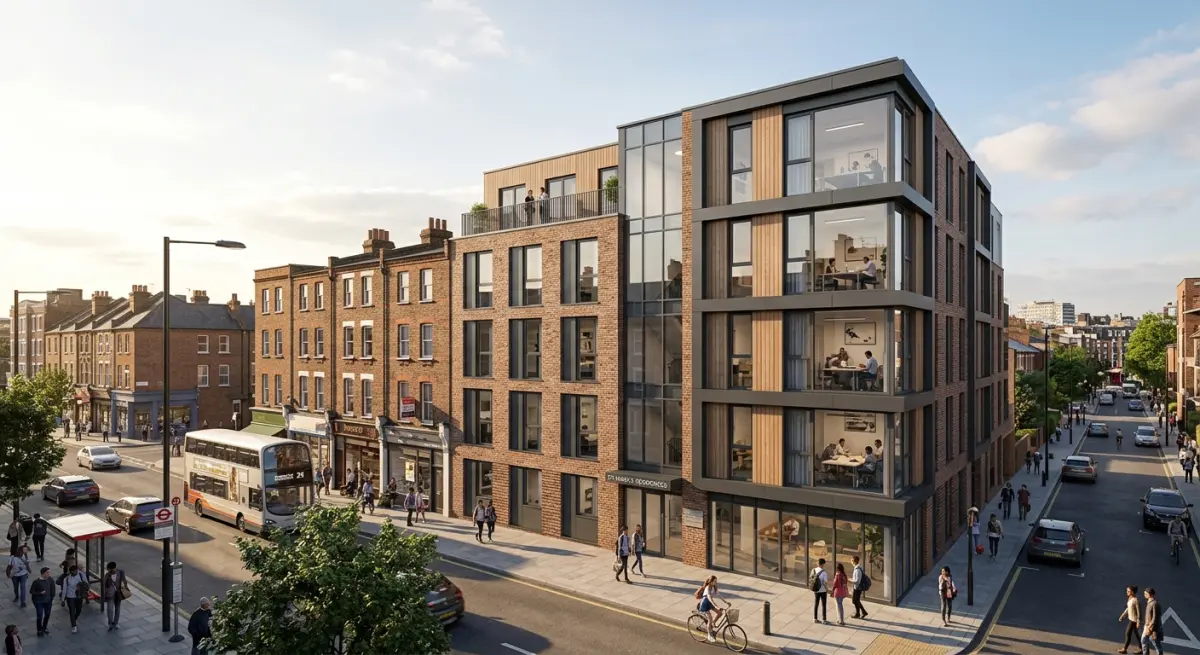
Planning authorities are a third audience with their own visual vocabulary. For PBSA schemes going through planning, the exterior renders need to do several specific jobs. They need to show accurate material representation, accurate massing, and an honest portrayal of how the building sits within its street scene or campus context.
We’ve written in depth about what local authorities look for in exterior 3d rendering for planning permission what councils actually look for in visualisations. For PBSA specifically, height is often a contentious issue — student blocks tend to be taller than surrounding residential buildings. The planning renders need to present this honestly, using verified viewpoints and photo-composited street-level perspectives where required. Inflating the render to minimise perceived height is a short-term approach that can create serious problems in the planning process.
Landscaping and public realm are often overlooked in the PBSA render package. A well-rendered ground-floor streetscape — showing cycle storage access, entrance design, and how the scheme interfaces with pedestrians — can actively support a planning narrative around community benefit. If the scheme includes any publicly accessible amenity space, make sure it appears in the renders. It’s one of the most cost-effective ways to support a planning officer’s recommendation.
What Render Formats Work Best for PBSA Pre-Approval Presentations
| Audience | Most Useful Render Type | Key Focus |
|---|---|---|
| Institutional Investors | Interior stills, 3D floor plans, 3D walkthrough | Room quality, amenity offer, operational logic |
| University Partners | Aerial overview, contextual exterior, communal interior stills | Campus fit, welfare environment, brand alignment |
| Planning Authorities | Street-level photo composites, verified viewpoints, aerial | Massing, materials, context, public realm |
| Pre-letting / Early Marketing | 360 virtual tour, animated walkthrough, lifestyle renders | Student appeal, social atmosphere, room quality |
For investor presentations, a 3D walkthrough animation is genuinely worth the investment at the pre-approval stage. It lets you walk a fund manager through the scheme in a way that slides can’t replicate. If you’re considering this format, our guide on 3d walkthrough vs 3d flythrough which presentation format wins more real estate approvals covers how to choose between formats depending on what you’re trying to achieve.
For early pre-letting — before the scheme even reaches planning approval — a 3d 360 virtual tour rendering of a typical room type and communal space gives prospective tenants and university nomination managers something genuinely interactive to engage with. It’s far more persuasive than flat imagery when you’re asking someone to commit to a room they can’t visit yet.
Common Mistakes in PBSA Render Packages — What Actually Goes Wrong
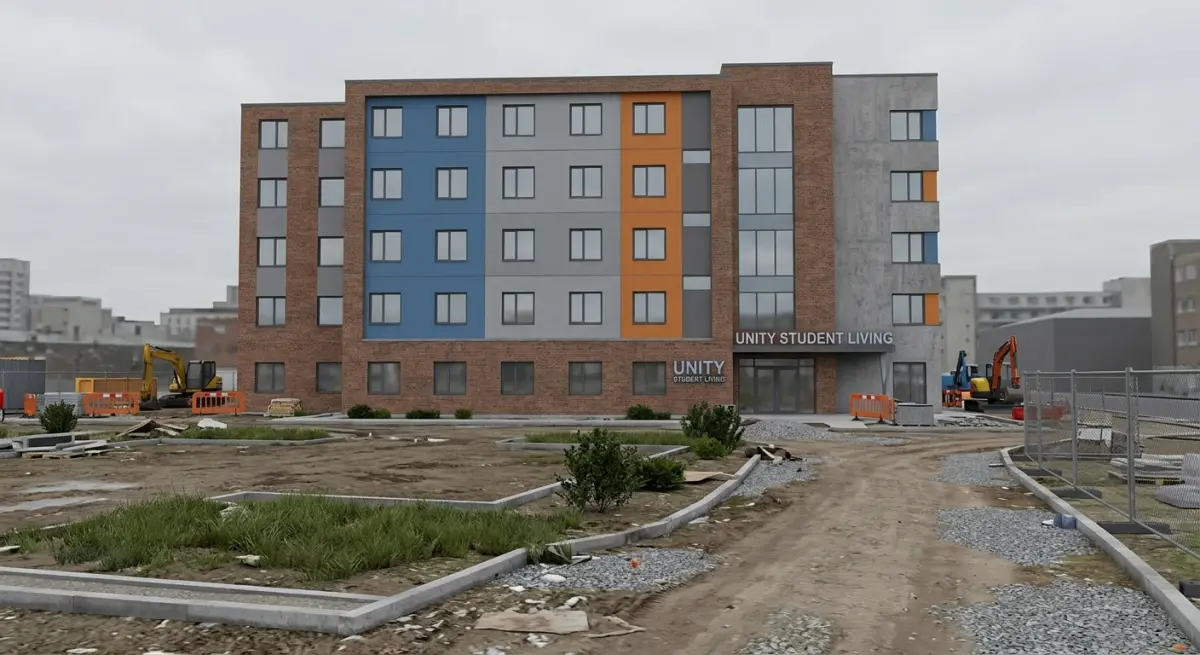
The most frequent mistake we see is developers approaching PBSA visualisation the same way they’d approach a standard residential scheme. The room sizes are different. The furniture typology is different. The communal infrastructure is a selling point in PBSA in a way it rarely is in standard residential. A render that ignores the amenity spaces and focuses exclusively on the bedroom is missing the point of what makes PBSA an investable asset class.
The second common issue is over-lighting interiors. Student accommodation bedrooms are compact. When a render blows out the interior with soft ambient light that eliminates all shadows and contrast, it no longer reads as real. Investors and university partners who’ve toured actual student rooms know what the light looks like. Photorealism earns more trust than aspirational warmth — the principles behind what makes a commercial exterior rendering look photorealistic lighting materials and context explained apply equally to interior renders in this sector.
Third: ignoring the exterior context entirely. We’ve seen PBSA schemes go into planning with stunning interior renders and a single exterior image that shows the building isolated from any surrounding context. Planning committees need to understand how the massing sits relative to neighbouring buildings, what the entrance looks like from the street, and how the public realm functions. The exterior package should never be an afterthought.
Finally, briefs that are too vague. If you’re commissioning renders for a PBSA scheme and you haven’t specified which audiences the images are for, what stage of the approvals process they support, or what decisions they need to drive — the output will be generic. We always ask clients upfront: who is sitting in the room when this image is shown, and what do you need them to feel confident enough to do? That question shapes everything about the render brief. If you’re not sure how to structure that brief, our guide on how to brief a 3d rendering studio what architects and developers need to prepare before project kickoff is a good starting point.
Pulling It Together: A Pre-Approval Render Package That Works for All Stakeholders
The best PBSA pre-approval render packs we’ve produced share a common structure. There’s a contextual aerial or drone-perspective exterior that establishes the scheme in its surroundings. There are two or three ground-level exterior views — including an entrance view and at least one streetscape composite. There’s a rendered floor plan of a typical floor showing unit mix and communal layout. There are interior renders covering at least one room type, the main communal kitchen-lounge, and a study or co-working space. And increasingly, there’s either a walkthrough animation or a 360 virtual tour for the investor and university audience.
That’s not a template — the actual scope depends on the scheme, the site, and who you’re presenting to. But the logic behind it is consistent: cover the exterior for planning, cover the operational logic for investors, cover the human experience for university partners, and make sure every render is honest enough to hold up to scrutiny from people who know the sector.
3D Rendering for Student Accommodation Developments: What PBSA Investors and University Partners Need to See at Pre-Approval Stage is ultimately a question of understanding your audiences before you brief your studio. If you’re working on a PBSA scheme and need a render package that actually does the work it needs to do at committee, funding, or nomination stage, get in touch with us at 360archviz.com. We’ll ask the right questions before we start, which means the output works for the people who matter most.
Frequently Asked Questions
What types of 3D renderings are required for PBSA planning applications at pre-approval stage?
At pre-approval stage, PBSA planning applications typically require photorealistic exterior CGIs showing the building in its surrounding context, accurate streetscape views, and internal amenity space visualisations such as study rooms, communal lounges, and bedroom layouts. Planning authorities and university partners increasingly expect drone-perspective aerial renders and daylight impact visuals to assess massing and neighbourhood compatibility. Providing a comprehensive render pack early reduces the risk of objections and speeds up the pre-application consultation process.
How do 3D renderings help PBSA investors secure university partnership agreements before planning approval?
High-quality 3D renderings allow PBSA investors to present a compelling, tangible vision of the student accommodation to university accommodation offices and procurement teams before a single brick is laid. Detailed visualisations of branded social spaces, room specifications, and on-site facilities help universities assess whether the development meets their pastoral and welfare standards for nominated beds. This visual evidence builds confidence in the operator's delivery capability and can accelerate heads of terms agreements significantly.
What level of detail should PBSA 3D renders show to satisfy local planning authority requirements?
Local planning authorities reviewing student accommodation developments typically expect renders to accurately reflect proposed materials, facade treatments, landscaping, and the relationship of the building to neighbouring structures and public realm. Renders should be produced from planning-specified viewpoints and include accurate shadow studies and seasonal lighting variations to demonstrate visual impact throughout the year. Using verified viewpoints tied to an Accurate Visual Representation methodology strengthens the credibility of the submission and reduces the likelihood of information requests.
How much does professional 3D rendering for a PBSA development typically cost at pre-application stage?
Professional 3D rendering packages for a PBSA development at pre-application stage typically range from £3,000 to £15,000 depending on the complexity of the scheme, number of required viewpoints, and level of photorealistic detail required. Larger mixed-use student schemes in city centres or sensitive conservation areas may require more extensive CGI packages including aerial views, interior renders, and public realm animations, which increases costs accordingly. Investing in high-quality visuals at this early stage is generally offset by faster planning decisions, stronger investor presentations, and more credible university partner negotiations.
Can 3D renderings be used for PBSA pre-sales and investor funding rounds before planning permission is granted?
Yes, photorealistic 3D renders and walkthrough animations are widely used by PBSA developers to raise equity funding, secure forward-funding agreements with institutional investors, and attract international student accommodation operators before planning consent is obtained. Investors and funders use these visuals to assess product quality, operational viability, and market positioning before committing capital at risk. Ensuring renders accurately reflect the consented scheme parameters and are updated to reflect any planning negotiation changes is essential to maintaining investor trust throughout the development process.